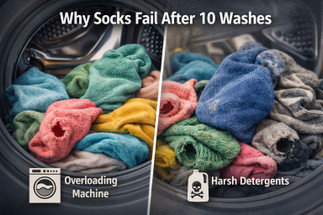
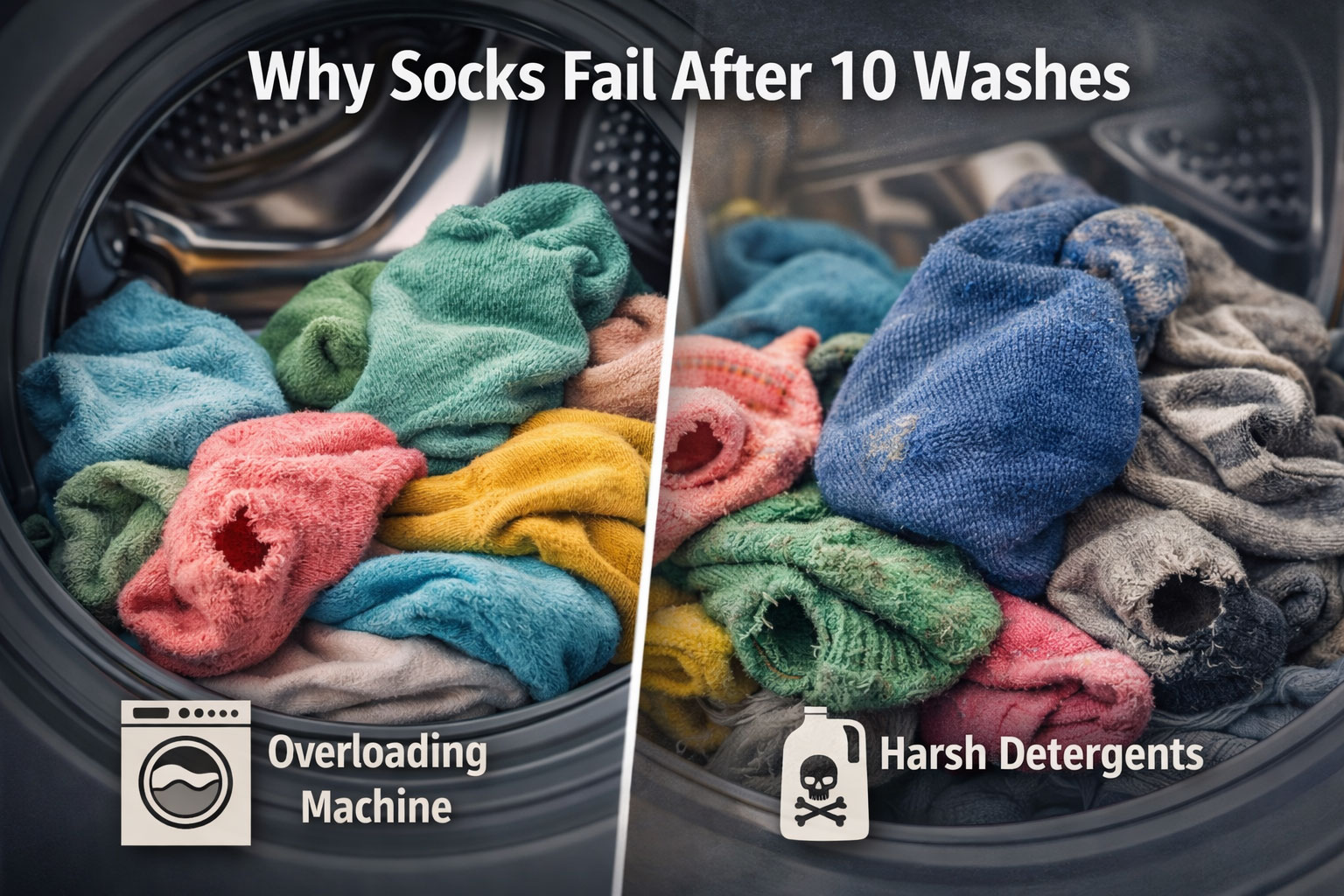
Why Socks Fail After 10 Washes
Why It Is Not Inevitable and How to Stop It
Most socks do not fail because they are worn out.
They fail because they are worn down.
After ten washes, many socks begin to thin at the heel, lose elasticity, fade, or develop holes. For most people, this feels unavoidable. Socks are treated as disposable items rather than engineered garments.
That mindset is exactly why failure happens so quickly.
Socks are exposed to friction, heat, moisture, chemicals, and mechanical stress every time they are washed. When laundry habits ignore how socks are constructed and what fibers they are made from, damage compounds rapidly.
At USA Socks, durability is not an accident. It is a result of material choice, construction discipline, and accountability. But even well made socks require proper care to reach their full lifespan.
Here are the 5 most common laundry mistakes that quietly destroy socks and how to correct them with simple, intentional habits. Quality lasts when it is respected.
Why Socks Wear Out Faster Than They Should
Every wash cycle is a stress test.
Water swells fibers. Agitation causes abrasion. Detergents strip oils. Heat weakens elasticity. When these forces are repeated without care, yarn strength breaks down and structural failure follows.
Improper washing and drying can reduce the usable life of socks by more than half. The good news is that most of this damage is preventable.
With the right approach, socks can last several times longer while maintaining comfort, fit, and appearance.
1. Overloading the Washing Machine
Why Overloading Causes Sock Failure
When a washing machine is packed too tightly, socks are compressed, twisted, and forced into constant friction with heavier garments. Heels and toes experience the most abrasion, which accelerates thinning and hole formation.
Overloading increases fabric to fabric contact and uneven tension during spinning.
How to Prevent Overload Damage
- Wash socks in smaller loads
- Use mesh laundry bags to reduce abrasion
- Sort socks away from heavy garments
- Choose gentle or delicate cycles
- Avoid unbalanced loads that cause excessive twisting
- Reducing friction is the single most effective way to extend sock life
2. Using Harsh Detergents
How Detergents Break Down Fibers
Many detergents are formulated for heavy stains and thick fabrics. Strong enzymes and high alkalinity strip natural fibers of their resilience. Over time, this makes socks brittle and prone to tearing.
Cotton and bamboo fibers are especially sensitive to chemical overexposure.
Better Detergent Practices
- Use mild plant based detergents
- Reduce detergent quantity for sock loads
- Avoid fabric softeners that coat fibers
- Spot treat stains instead of soaking entire loads
- Clean socks do not require aggressive chemistry
3. High Heat Drying
Why Heat Is So Destructive
Dryer heat weakens elastic threads and causes fibers to shrink or fracture. Once elasticity is compromised, socks lose shape permanently. This damage cannot be reversed.
High heat is one of the fastest ways to shorten sock lifespan.
Smarter Drying Habits
- Air dry socks whenever possible
- Lay socks flat to maintain shape
- Use low heat only when necessary
- Keep socks out of direct sunlight
- Reshape socks gently while damp
Air drying alone can add dozens of additional washes to a pair of socks.
4. Ignoring Material Specific Care
Not all socks behave the same. Treating them as identical leads to premature failure.
Cotton Socks
- Wash in cold water
- Avoid high agitation
- Turn socks inside out before washing
Bamboo Socks
- Cold wash only
- Use gentle cycles
- Avoid heat to preserve softness and breathability
Wool Blend Socks
- Cold water is essential
- Minimal agitation
- Lay flat to dry and reshape
5. Skipping Sorting and Pre Treatment
Why Preparation Matters
Socks washed with towels or rough fabrics collect lint and experience increased abrasion. Stains left untreated often require harsher cleaning later, which further weakens fibers.
Better Laundry Preparation
- Sort socks by fabric and lint level
- Pre treat stains immediatelya
- Inspect socks before drying
- Avoid mixing lightweight socks with heavy garments
Quality Is a Choice
Socks fail early when they are treated as disposable. They last when they are treated as engineered products. During times of scarcity, clothing was built to endure because failure had consequences. That mindset still matters.
At USA Socks, we believe durability is not a compromise. It is a responsibility. When socks are made with intention and cared for with discipline, ten washes is only the beginning.