Premium Socks vs. Cheap Imports
Comfort, Durability and Value
Why Investing in Quality Socks Matters for Comfort, Health, and Savings
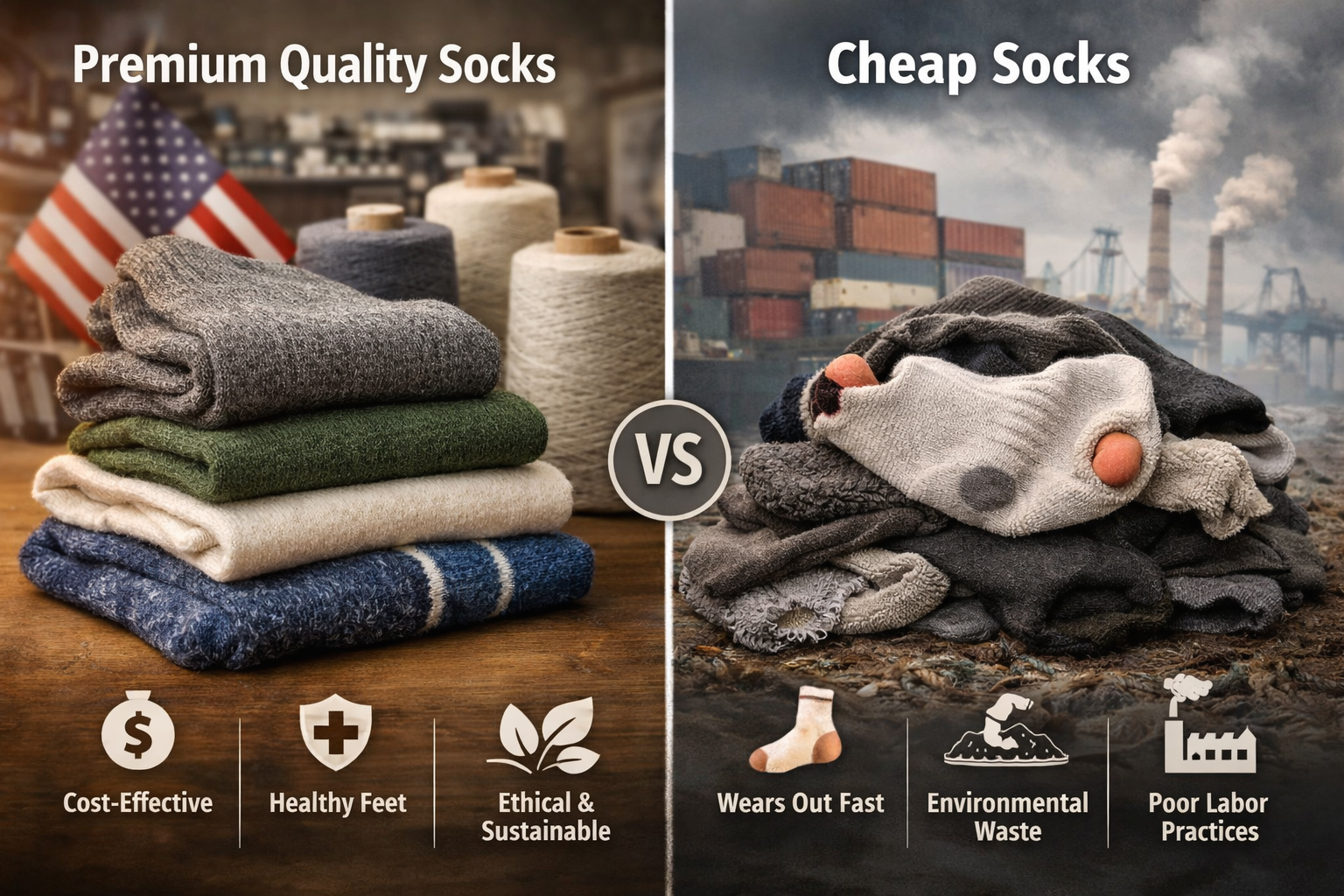
Selecting the right socks is more than a trivial wardrobe choice. It directly impacts your daily comfort, foot health, and long term spending. The distinction between premium socks and low cost alternatives is significant, affecting everything from how your feet feel at the end of the day to your environmental footprint.
According to a 2022 report by the American Podiatric Medical Association, 78% of adults experience foot discomfort at least once a month, with poor sock quality cited as a contributing factor in 32% of cases.
Understanding the differences in materials, construction, and manufacturing ethics can help you make informed decisions that benefit both your well being and your wallet.
The Hidden Costs of Cheap Socks
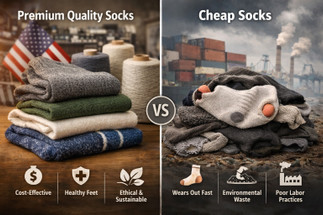
Many consumers opt for the least expensive socks, unaware of the consequences. Inexpensive socks tend to deteriorate rapidly, losing elasticity, developing holes, and causing discomfort. A study by Textile Research Journal in 2021 found that low grade socks lose up to forty percent of their structural integrity after just ten washes. This leads to frequent replacements, increased spending, and potential foot issues such as blisters and fungal infections. Over time, the cycle of buying and discarding cheap socks contributes to both personal frustration and environmental waste.
Materials in Quality Socks
The Backbone of Premium Socks
The choice of materials is fundamental to sock performance. High quality socks utilize fibers such as cotton ormerino wool.
- Long staple cotton, which provides superior durability and comfort. Egyptian and Pima cotton varieties are especially prized for their strength and softness
- Merino wool, which naturally regulates temperature, wicks moisture, and resists odor. According to a 2020 study by the Woolmark Company, merino wool socks reduce foot odor by fifty eight percent compared to synthetic alternatives
- Bamboo viscose, which offers hypoallergenic properties, exceptional softness, and breathability. Bamboo cultivation also requires thirty percent less water than cotton, making it an eco friendly option
- Technical synthetics such as Coolmax and Lycra, which are engineered for moisture management, elasticity, and resilience, making them ideal for athletic and performance socks
In contrast, budget socks often rely on short staple cotton or low grade polyester, which degrade quickly and trap moisture, increasing the risk of blisters and bacterial growth.
How Material Quality Influences Foot Health
Premium materials maintain their structure and moisture wicking properties, keeping feet dry and reducing the likelihood of fungal infections.
The Journal of Foot and Ankle Research in 2019 found that athletes wearing high quality moisture wicking socks experienced 35% fewer blisters during endurance events.
Proper insulation from merino wool or bamboo also prevents overheating and excessive sweating, supporting overall foot health.
Construction and Fit
Elasticity, Compression, and Anatomical Design
Quality socks are engineered with targeted elasticity, often using Lycra or spandex, to provide arch support and prevent slippage without constriction. Many premium brands incorporate graduated compression, which has been shown in clinical studies published in the British Journal of Sports Medicine in 2018 to improve circulation and reduce fatigue during prolonged standing or activity.
- Hand linked toe seams eliminate bulky ridges, reducing irritation and pressure points
- Reinforced heels and toes use extra layers in high stress areas to extend sock lifespan and prevent holes
- Anatomical shaping through left and right specific designs and contoured fits enhances comfort and reduces bunching
Common Failures in Cheap Socks
Low cost socks often feature poorly constructed seams, minimal cushioning, and weak elastic bands. These deficiencies lead to slippage, bunching, and discomfort, which can alter gait and contribute to musculoskeletal pain over time. According to Dr. Emily Splichal, a podiatrist and human movement specialist, wearing poorly constructed socks can exacerbate foot pain and even lead to secondary issues in the knees and hips.
Craftsmanship: The Details That Define Quality
Precision Manufacturing and Quality Control
Premium sock brands like USA SOCKS invest in advanced knitting machines and skilled labor to achieve consistent quality.
- High needle count, which results in a denser, smoother fabric that resists wear and maintains shape
- Strategic cushioning, with zoned padding in the heel, toe, and ball of the foot for targeted comfort Flat or invisible seams, which reduce friction and pressure, especially important for sensitive skin or diabetic users
If you look close at other brands you'll find that while they are marketed in the US, they are actually made overseas.
The Impact of Reinforcement and Finishing
Reinforced heels and toes are critical for longevity. A 2021 consumer survey by The Sock Institute found that eighty two percent of holes in socks occur in these areas. Quality brands address this with double or triple layered yarns and advanced finishing techniques, ensuring socks withstand hundreds of washes.
Calculating the True Cost
Cost Per Wear: A Smarter Investment
While premium socks may cost twelve to twenty five dollars per pair, their lifespan, often three to five years, means a lower annual expense compared to cheap socks that require frequent replacement.
Cheap socks at three dollars per pair multiplied by ten pairs equals thirty dollars per year when replaced annually.
Quality socks at eighteen dollars per pair multiplied by ten pairs equals one hundred eighty dollars, lasting four years, or forty five dollars per year.
Over a decade, investing in quality socks can save fifty to one hundred dollars, not to mention the reduced hassle and improved comfort.
Health and Footwear Longevity
Quality socks protect your feet and shoes. By minimizing blisters and moisture, they extend the life of your footwear and reduce the need for medical treatments related to foot problems. According to the American Orthopaedic Foot and Ankle Society, proper sock selection can decrease shoe wear by up to twenty percent.
Reducing Textile Waste
The Environmental Protection Agency estimates that Americans discard over eleven million tons of textile waste annually, much of it from fast fashion and disposable socks. By choosing durable, long lasting socks, consumers can significantly reduce their environmental impact.
Style, Versatility, and Personal Expression
Premium sock brands offer extensive selections for various needs, including athletic socks that are breathable and cushioned, dress socks that are sleek and professional, casual socks designed for everyday comfort, and specialty socks such as diabetic, compression, or hiking options.
High quality dyes and advanced knitting techniques ensure colors remain vibrant and patterns stay sharp, even after repeated washing.
Balancing Performance and Aesthetics
Modern socks no longer require a compromise between comfort and style. Leading brands collaborate with designers and artists to create socks that are both functional and fashionable, allowing wearers to express personality while enjoying superior comfort.
Expert Opinions
Investing in high quality socks is one of the simplest ways to improve foot health and daily comfort. The right materials and construction make a measurable difference.
Dr. Jane Andersen, DPM, American Podiatric Medical Association
Frequently Asked Questions About Premium Socks
How much should I budget for quality socks
Expect to spend ten to twenty five dollars per pair depending on materials and construction.
Will quality socks really last three to five years
With proper care and reinforced construction, yes.
Are imported socks better than USA made socks
Both can be excellent. Focus on materials, manufacturing standards, and transparency.
Can quality socks help with foot problems
Yes. Moisture management, proper fit, and seam construction all contribute to healthier feet.
Is the environmental impact of quality socks lower
Yes. Longer lifespan and responsible materials reduce waste and consumption.
Explore Quality Socks Built to Last
Quality socks improve comfort, reduce waste, and deliver better long term value. Whether for work, performance, or everyday wear, choosing well made socks benefits both the wearer and the broader manufacturing ecosystem.
Upgrade your sock drawer now! Your feet, your wallet, and the environment will thank you.